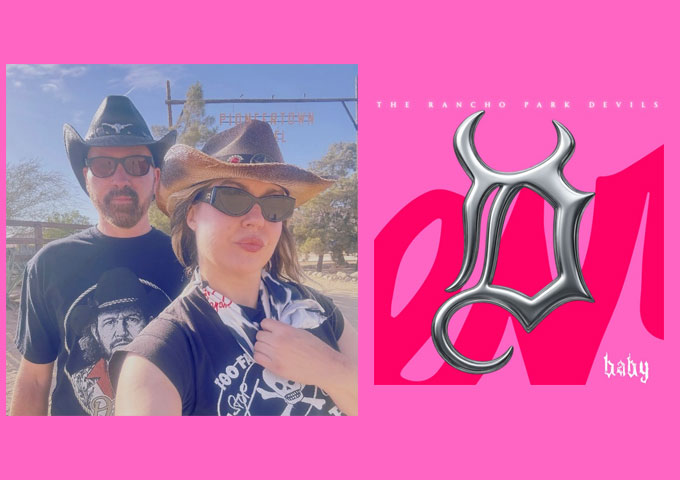
Beneath its deceptively playful title, “I Like Love You” reveals a relationship shaped by affection, rejection, and persistent frustration. The Rancho Park Devils give voice to a narrator who continues to pursue connection despite receiving little reassurance in return. Repeated declarations and increasingly emphatic lyrics expose the imbalance at the heart of the relationship. The duo’s alternative-pop approach adds a confident edge to a subject often presented through idealized romantic imagery. Featured on Baby, the single demonstrates how unconventional expression can give familiar emotions a fresh perspective.
Love rarely follows a script, particularly when affection meets rejection and the desire to walk away conflicts with the impulse to return. The Rancho Park Devils explore this complicated territory on “I Like Love You,” a single that transforms an apparently straightforward declaration into a portrait of romantic dysfunction, stubborn attachment, and mismatched expectations. Taken from the duo’s debut release, Baby, the track finds its identity in the tension between familiar feelings and an unconventional approach to expressing them.
The title immediately establishes the song’s distinctive personality. “I Like Love You” sounds deliberately conversational, as though its narrator has encountered a feeling that refuses to fit comfortably into conventional romantic language. Sitting somewhere between casual affection and an earnest confession, the phrase suggests someone attempting to communicate an intense attachment without quite knowing how to articulate it. Its slightly awkward construction gives the title an endearing quality, while the lyrics introduce a much less comfortable reality: the person making the declaration receives hostility rather than affection in return.
The opening lines establish this contrast with striking directness. The narrator insists on loving the other person while acknowledging the resentment directed back at them. The repetition creates an immediate sense of imbalance, establishing a relationship in which one person continues to pursue intimacy while the other appears determined to reject it. Rather than presenting romance as an uncomplicated exchange, The Rancho Park Devils explore what happens when affection persists despite the absence of meaningful reciprocity.
That conflict becomes more apparent as the narrator describes the unpredictability of their encounters. The other person’s reactions remain difficult to understand, and the relationship seems to alternate between emotional confrontation and renewed attempts at connection. The admission of repeatedly returning, despite wanting to be left alone, captures the difficulty of breaking a familiar pattern even after its limitations have become apparent.
The lyrics become more pointed when the narrator describes offering their heart and allowing the other person access to their private world, only to be rejected. The imagery of an opened door that never leads to genuine intimacy suggests that the relationship’s central problem is not a lack of effort but a lack of mutual willingness. The narrator has offered an opportunity for a deeper connection, yet that vulnerability has not produced the understanding they hoped to find.
This is where the song moves beyond a straightforward account of romantic disappointment. Its narrator repeatedly emphasizes the sacrifices they would make for the other person, promising to endure extraordinary challenges in the name of love. The imagery becomes increasingly dramatic, elevating devotion into something almost limitless. These declarations convey determination, but they also expose the imbalance at the heart of the relationship: one person is prepared to give everything, while the other continues to respond with hostility.
The recurring accusations of meanness introduce a more confrontational dimension. Rather than simply lamenting rejection, the narrator begins to identify the other person’s behavior as a persistent source of harm. The contrast between extravagant promises of devotion and the repeated complaint of being treated badly gives the lyrics their sharpest edge. Love may motivate the narrator’s persistence, but it cannot guarantee that the relationship will become healthy or reciprocal.
Importantly, “I Like Love You” does not attempt to resolve this contradiction through a tidy conclusion. The narrator continues to express affection even as frustration becomes increasingly difficult to ignore. This refusal to separate love neatly from resentment gives the writing its character, while the repeated phrases reinforce the sense of a relationship trapped in a familiar cycle.
The title’s unconventional wording also takes on greater significance as the song unfolds. What initially sounds playful becomes a distinctive expression of a feeling that resists conventional language. The phrase is neither a straightforward declaration of love nor a casual statement of attraction. Instead, it occupies an uncertain middle ground, reflecting a narrator who knows what they feel but cannot reconcile those feelings with the treatment they receive.
Musically, the track’s alternative-pop identity offers a fitting framework for its unconventional approach to familiar subject matter. The Rancho Park Devils bring an accessible emotional premise into a broader artistic setting that favors contrast over convention. The single’s confident mood and futuristic outlook provide an intriguing counterpoint to the uncertainty in the lyrics. While the narrator struggles to understand the relationship, the creative direction remains assertive, embracing the friction between vulnerability and attitude rather than smoothing it away.
That balance reflects the duo’s wider musical sensibility, which draws on the immediacy of pop and the exploratory instincts of alternative rock. Nostalgic in spirit but forward-looking in outlook, The Rancho Park Devils make room for melody and experimentation without treating them as opposing forces. Their approach brings together grit and polish, rawness and refinement, familiarity and surprise. “I Like Love You” translates those contrasts into a relationship narrative that avoids predictable romantic gestures and easy resolutions.
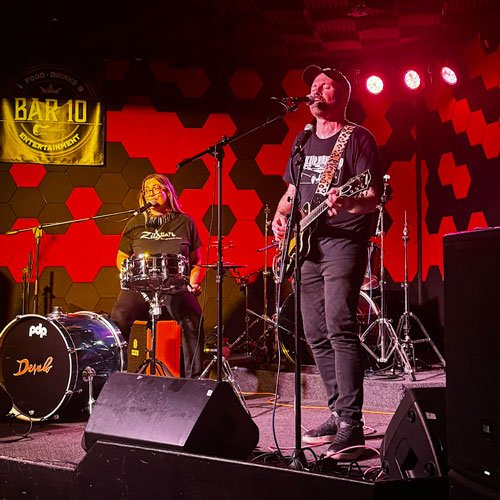
Founded in early 2025 by Los Angeles natives C. Tyler Michaud and Cheryl Lee Scott, The Rancho Park Devils emerged from parallel lives and a shared, lifelong passion for their hometown’s eclectic musical landscape. Scott handles drums and percussion, while Michaud contributes bass, guitar, and organ. Their multi-instrumental partnership informs a songwriting approach that combines rock-oriented energy with melodic instincts, establishing a foundation for music that feels both grounded and unconventional.
Their six-song debut, Baby, was recorded at Clear Lake Studios, with Eric Milos handling the mixing and Grammy-winning mastering engineer Eric Boulanger completing the mastering at The Bakery. The release introduces a signature sound that embraces both grit and melody. “I Like Love You” carries that identity into an alternative-pop setting, demonstrating how the duo can explore recognizable emotions through a distinctive lyrical and stylistic perspective.
Released through Tigertail Records on May 8, 2026, “I Like Love You” establishes The Rancho Park Devils as a duo interested in the complications beneath familiar romantic declarations. Its conversational title, confrontational lyrics, and alternative-pop orientation create a distinctive combination of accessibility and experimentation. Rather than offering an idealized account of love, the single embraces the awkwardness of feelings that refuse to follow a logical course. That willingness to leave contradictions intact gives the track its identity, while the duo’s confident artistic approach ensures that its unconventional perspective makes a clear impression.
OFFICIAL LINKS: WEBSITE – SPOTIFY – APPLE MUSIC